
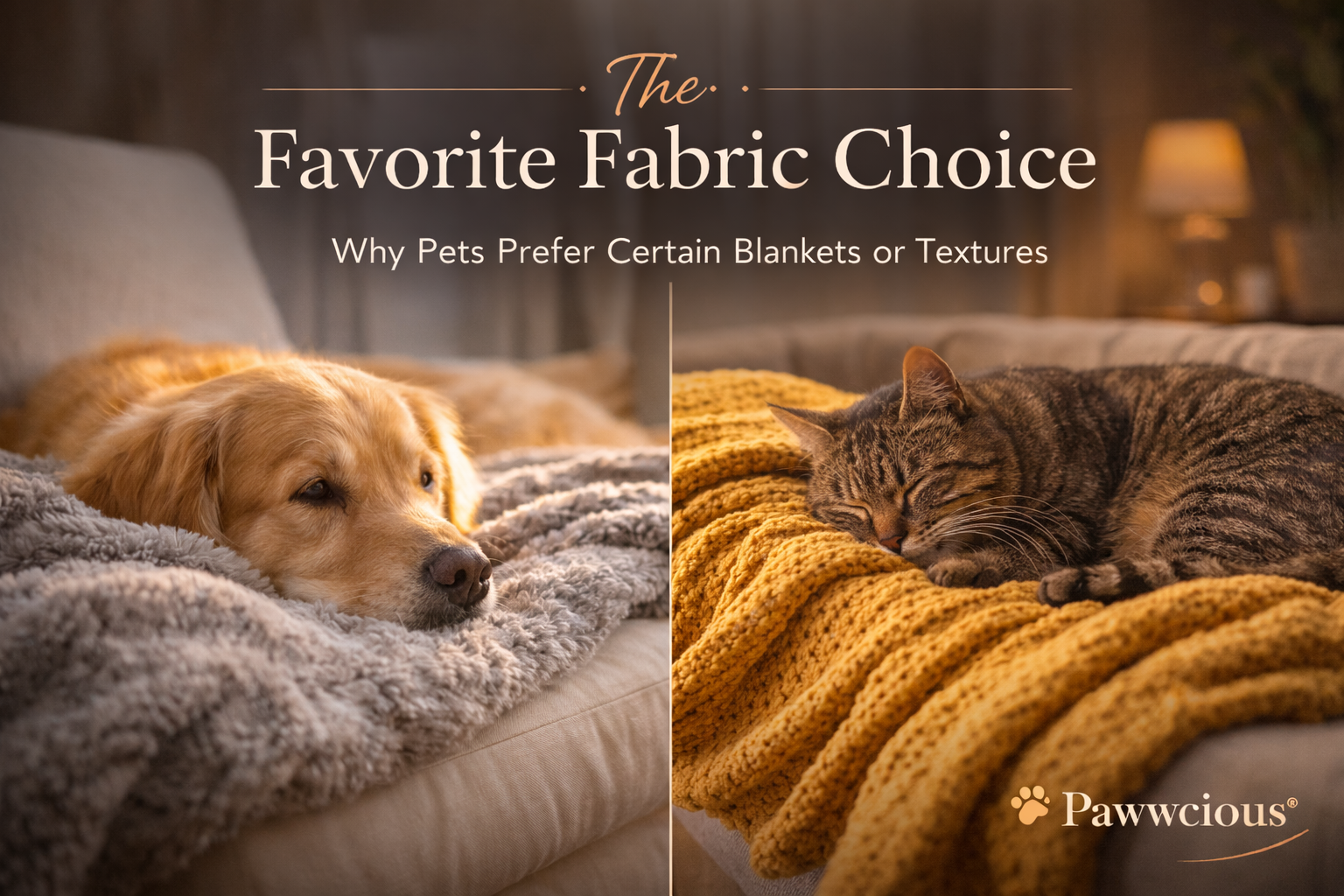
Why Pets Prefer Certain Blankets or Textures
You may have noticed it more than once.
Your pet has multiple places to rest.
A bed. A sofa. A mat. Maybe even the floor.
And yet, they keep returning to one specific blanket, one particular rug, or one familiar fabric.
It may look random, but it rarely is.
Pets are deeply sensitive to texture. The surfaces they choose often reflect much more than comfort alone. Their fabric preferences can reveal emotional safety, body comfort, temperature needs, and even trust in their surroundings.
That is why understanding why pets prefer certain blankets can tell us a lot about how they experience home.
1. Texture Feels Different to Pets Than It Does to Humans
Humans often choose fabrics based on style, softness, or habit.
Pets choose with their whole body.
They notice:
- how the material feels under their paws
- whether it holds warmth
- whether it feels secure or slippery
- how familiar it smells over time
For many pets, texture is not just physical. It is emotional.
A certain blanket can start to feel like a safe zone.
2. Soft Fabrics Often Signal Safety
Many dogs and cats are naturally drawn to soft, slightly warm fabrics because they reduce physical tension.
Soft blankets may help pets:
- relax the body faster
- ease pressure on joints
- settle into sleep more comfortably
- feel protected and enclosed
This is one reason pet parents often wonder about dog blanket preference meaning. In many cases, the answer is simple: softness makes the body feel safe enough to rest.
3. Familiar Fabric Holds Familiar Scent
Texture is important, but scent memory matters too.
A pet’s favorite blanket often carries:
- their own scent
- your scent
- the scent of a room they trust
This makes that fabric emotionally powerful.
When pets repeatedly choose the same textile, they may not only be choosing how it feels — they may also be choosing how it smells.
That combination of familiar texture and familiar scent creates a strong feeling of reassurance.
4. Some Pets Prefer Cool, Firm, or Textured Surfaces
Not every pet loves plush softness.
Some prefer:
- woven cotton
- smooth mats
- firmer rugs
- cooler textures
- lightly textured upholstery
This does not mean they are less affectionate or less relaxed. It simply means their sensory system responds differently.
Understanding pet comfort texture behavior means accepting that comfort is personal. One pet may melt into fleece, while another chooses a flat cotton throw every single time.
5. Temperature Plays a Big Role
Blankets and fabrics affect how warm or cool a pet feels.
A thick blanket may feel perfect during a calm evening but too warm on a humid afternoon. A cooler textured mat may feel better after movement or play.
Pets often rotate between textures based on:
- body heat
- weather
- time of day
- energy level
So if your pet suddenly stops choosing one blanket and shifts to another fabric, it may simply be a comfort adjustment — not a rejection.
6. Cats and Dogs Show Fabric Preference Differently
Dogs and cats often express their fabric choices in slightly different ways.
Dogs
Dogs may:
- circle once or twice before settling
- push their nose into a blanket
- return to the same texture after exploring other options
- stretch fully only on certain surfaces
Cats
Cats may:
- knead a specific blanket
- curl into only one type of fabric
- sit on laundry instead of a pet bed
- choose textured spots with scent familiarity
In both species, these habits are not random. They are quiet signs of what feels right in the body and nervous system.
7. What This Preference Says About Emotional Safety
When pets repeatedly choose one fabric over others, it often means that surface has become part of their emotional routine.
It may represent:
- predictability
- nervous-system calm
- physical comfort
- a feeling of “my place”
This is why cat favorite sleeping fabric and dog bedding preferences can be so meaningful. These choices often reveal where your pet feels most at ease.
8. Should You Change Your Pet’s Favorite Blanket?
If a pet clearly loves one blanket or texture, it is usually best not to replace it too quickly.
Even if the blanket looks old, it may still provide emotional value.
If you need to replace it:
- choose a similar texture
- keep part of the original scent if possible
- introduce the new fabric slowly
- place it in a familiar rest spot
Comfort changes best when it feels familiar.
9. How Pet Parents Can Support Healthy Fabric Preference
You do not need dozens of expensive beds or blankets.
You just need to observe.
Notice:
- which texture your pet chooses most often
- whether they prefer warm or cool surfaces
- whether they rest differently on different materials
- whether their favorite texture changes with mood or weather
This helps you build a home that feels emotionally supportive, not just visually nice.
Why This Small Behavior Matters
A favorite blanket may seem like a tiny detail.
But for a pet, that detail can mean:
- safety
- relief
- familiarity
- peace
Understanding why pets choose certain textures teaches us something important: comfort is not always visible from the outside.
Sometimes, trust looks like returning to the same fabric again and again.
And when a pet chooses a place repeatedly, they may be telling you:
This feels like home.
Also Read –The Paw Placement Pause