
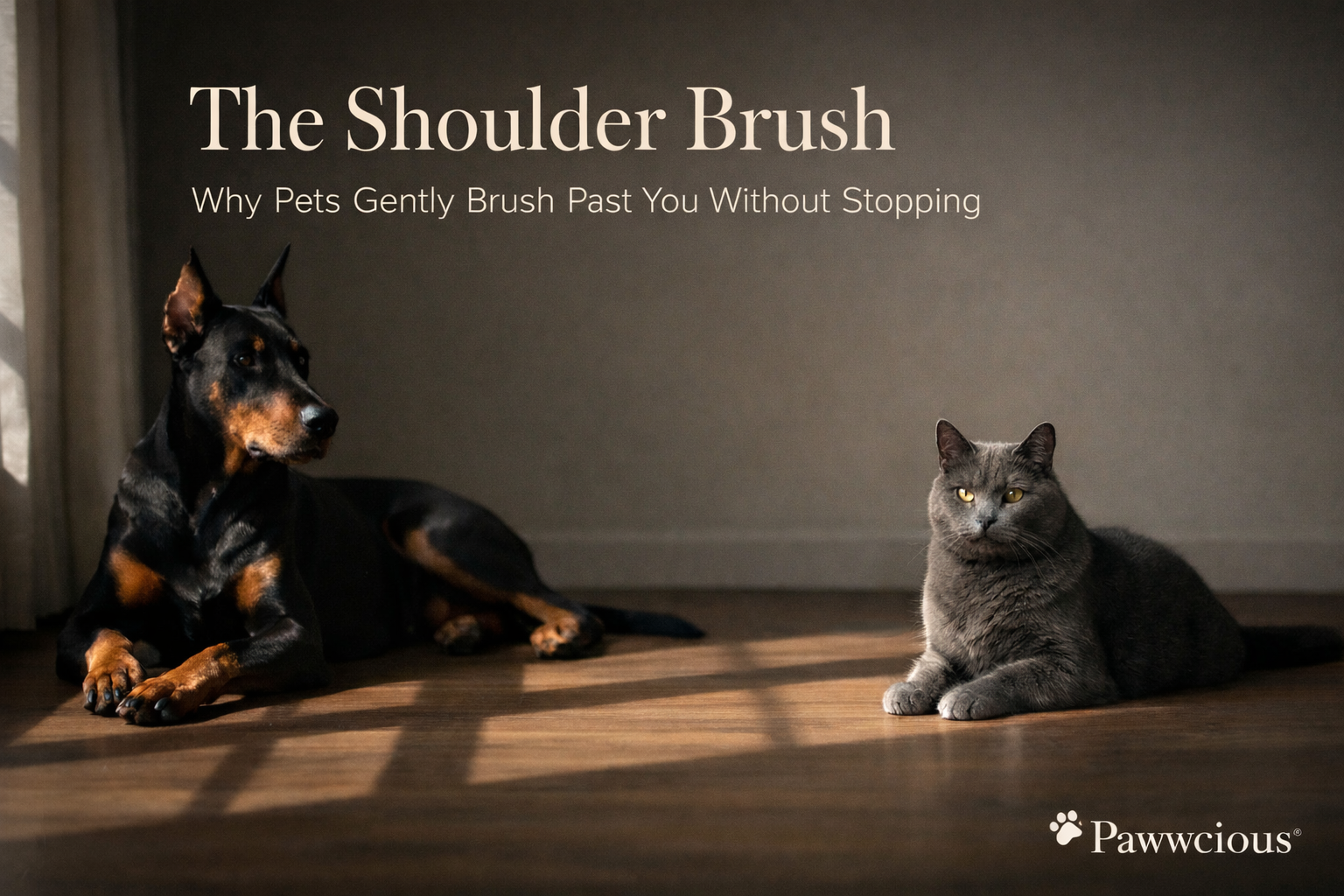
Why Pets Gently Brush Past You Without Stopping
It happens in the most ordinary moments.
You’re standing in the kitchen.
Walking through the hallway.
Sitting at your desk.
Your pet passes by —
and gently brushes your leg or shoulder.
No pause.
No eye contact.
No request for touch.
Just contact — and continuation.
This is what we call the shoulder brush, and it’s one of the most emotionally intelligent gestures pets display.
It’s Not Attention-Seeking
If your pet wanted interaction, they would:
- Stop
- Sit
- Look up
- Vocalize
- Paw gently
The shoulder brush is different.
It’s a low-demand connection gesture.
It says:
“I’m here. We’re connected.”
Without asking for anything in return.
Why This Happens
When pets feel secure in their bond, they don’t need constant reassurance.
The gentle brush serves to:
- Confirm proximity
- Reinforce attachment
- Exchange scent subtly
- Maintain shared space awareness
It’s a quiet emotional check-in — but softer than a glance.
Dogs vs Cats: Different Expressions
Australian Shepherds and other social breeds
May lightly press their shoulder or flank as they pass, especially in shared spaces.
British Shorthairs and composed feline breeds
Often brush with their side or tail base, continuing forward without stopping.
Different species.
Same message.
What It Tells You About Emotional Safety
The shoulder brush signals:
- Calm attachment
- Secure bonding
- Environmental confidence
- Absence of anxiety
Pets that feel insecure tend to demand more overt reassurance.
This gesture is subtle because the bond is strong.
When You’ll Notice It Most
- During relaxed household routines
- In familiar environments
- After emotional needs are met
- When energy in the room is calm
It’s rarely seen in overstimulated settings.
What Pet Parents Should Do
- Don’t overreact
- Avoid grabbing or interrupting
- Let the movement complete naturally
Connection doesn’t need amplification.
Why This Gesture Matters
The shoulder brush is a sign of emotional maturity.
Your pet isn’t seeking validation.
They’re expressing quiet trust —
and moving on peacefully.
In many ways, that’s the purest form of attachment.