
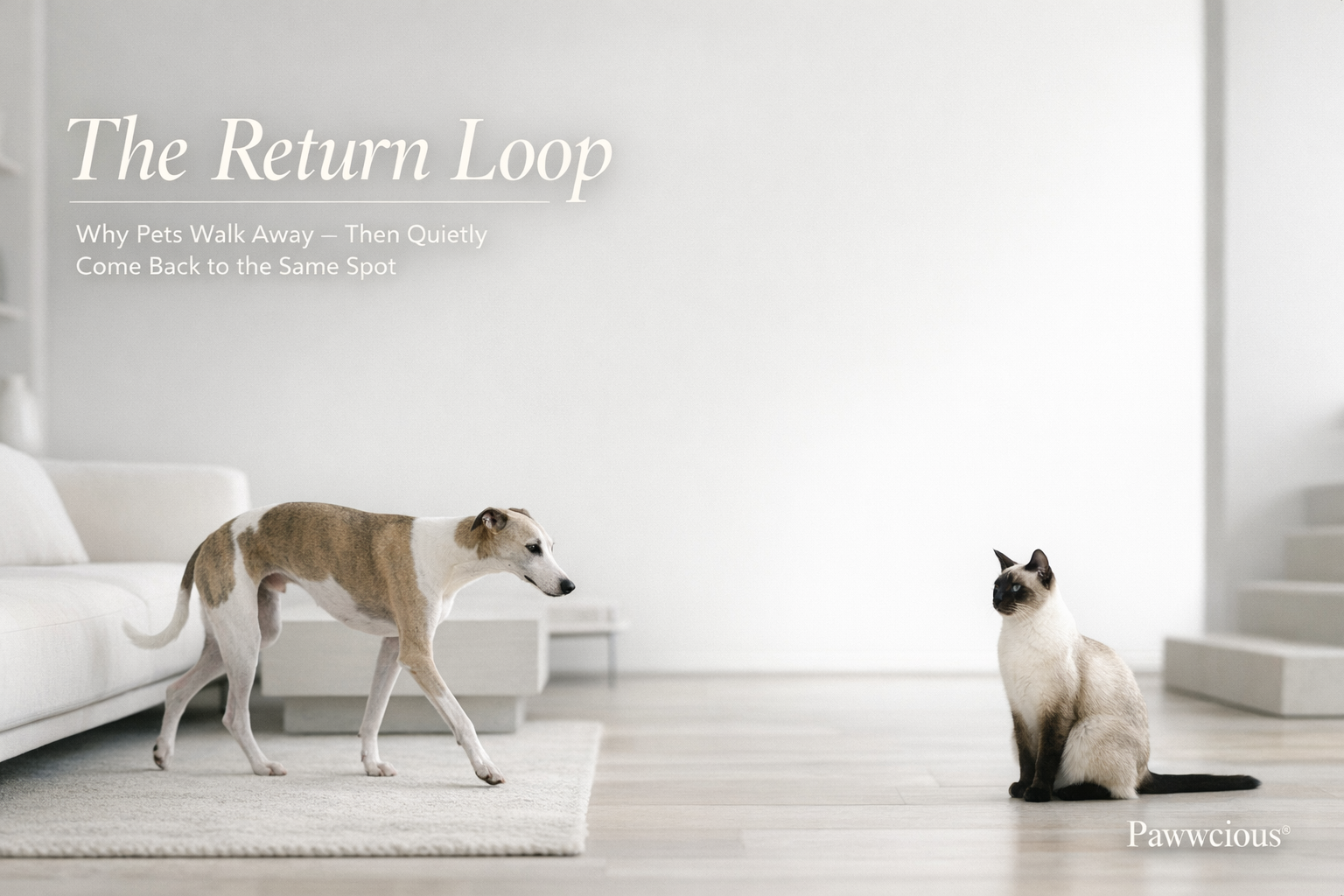
Why Pets Walk Away — Then Quietly Come Back to the Same Spot
You may have seen it without thinking much about it.
Your pet is resting peacefully.
They get up.
Walk away for no obvious reason.
Pause somewhere else.
And then — quietly — they return to the exact same spot.
This behavior is what we call the return loop, and it reveals something powerful about emotional safety and environmental trust.
Why Pets Don’t Stay in One Place
Even in calm environments, pets maintain awareness.
Leaving a resting spot briefly allows them to:
- Reconfirm environmental safety
- Reset sensory input
- Check spatial boundaries
- Maintain light territorial awareness
It’s not restlessness.
It’s reassurance.
The Emotional Meaning Behind the Return
What matters most is not the leaving —
It’s the coming back.
Returning to the same place means:
- The original spot still feels safe
- Nothing changed during the brief check
- Comfort remains intact
The return confirms trust in the environment.
Dogs vs Cats: Different Styles, Same Purpose
Whippets and other sighthounds
Often stand, walk with purpose, circle lightly, then return with deliberate calm.
Siamese and other intelligent breeds
May pause in a doorway, observe quietly, then reappear in the same resting area.
Different movement patterns.
Same emotional message.
When You’ll Notice the Return Loop Most
- During quiet evenings
- After minor environmental sounds
- In secure, familiar homes
- When pets feel emotionally balanced
In anxious environments, pets may not return at all — they relocate instead.
What This Behavior Tells You
The return loop signals:
- Emotional security
- Spatial confidence
- Balanced nervous-system response
- Environmental trust
It’s a quiet “everything is still okay.”
What Pet Parents Should Do
- Avoid interrupting the movement
- Don’t call them back immediately
- Let the loop complete naturally
Reassurance works best when self-chosen.
Why the Return Loop Matters
This small pattern shows how pets maintain safety without drama.
They don’t need to react loudly.
They don’t need constant contact.
They simply check —
And then choose comfort again.
That choice is trust.