
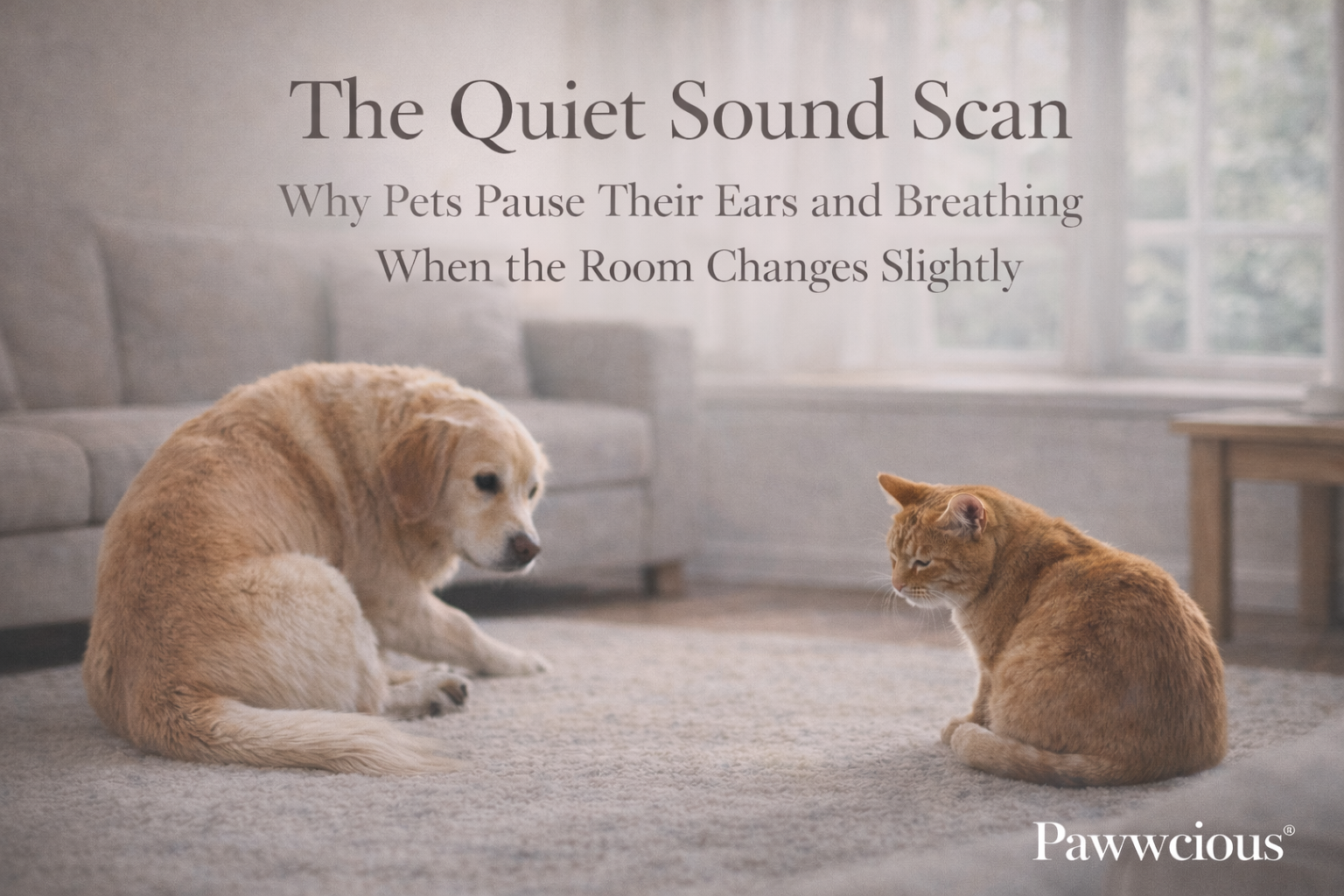
Why Pets Pause Their Ears and Breathing When the Room Changes Slightly
You might not even notice it.
Your pet is chewing.
Resting.
Half-asleep.
Then — for just a second — everything pauses.
Ears shift direction.
Breathing slows.
The body becomes still.
Nothing dramatic follows.
This moment is called the quiet sound scan, and it’s one of the most instinctive behaviors pets display when something in the room changes slightly.
Why the Pause Happens So Quickly
Pets live in a world of layered sound and vibration.
They detect:
- Distant footsteps
- Door pressure changes
- Appliance hum shifts
- Subtle environmental vibrations
When something changes, the nervous system performs a quick scan.
It’s not fear.
It’s calibration.
The Difference Between Alarm and Awareness
An alarm response is sharp and reactive.
A quiet sound scan is brief and controlled:
- No barking
- No running
- No tense posture
Just a moment of still listening.
If nothing signals danger, your pet resumes exactly where they left off.
That return to calm is the key.
What Happens Inside the Nervous System
During a quiet sound scan:
- The sympathetic system activates briefly
- The parasympathetic system quickly balances it
- Breathing adjusts for clarity
- Muscles remain loose
This is healthy alertness — not anxiety.
Dogs vs Cats: Subtle Differences
Dogs
- Ears may freeze in one direction
- Chewing pauses mid-motion
- Head lifts slightly but body stays relaxed
Cats
- Whiskers still
- Eyes narrow
- Breathing pauses subtly
Both are assessing, not reacting.
When You’ll Notice the Quiet Sound Scan Most
This behavior appears:
- During quiet evenings
- In familiar environments
- When the household is calm
- When pets feel emotionally secure
It disappears in overstimulating spaces where constant scanning becomes normal.
What the Quiet Sound Scan Tells You
- Brief pause = environmental awareness
- Immediate return to calm = emotional safety
- No escalation = balanced nervous system
Your pet isn’t anxious.
They’re attentive.
What Pet Parents Should Do
- Avoid reacting suddenly
- Don’t call attention to the pause
- Maintain calm energy
- Let the scan complete naturally
Over-interpreting it can create unnecessary stimulation.
Why This Behavior Matters
The quiet sound scan shows how finely tuned pets are to their environment.
It reflects:
- Sensory intelligence
- Nervous-system balance
- Confidence in safety
In a world full of noise, your pet listens deeply —
and then chooses calm.
That choice is trust.