
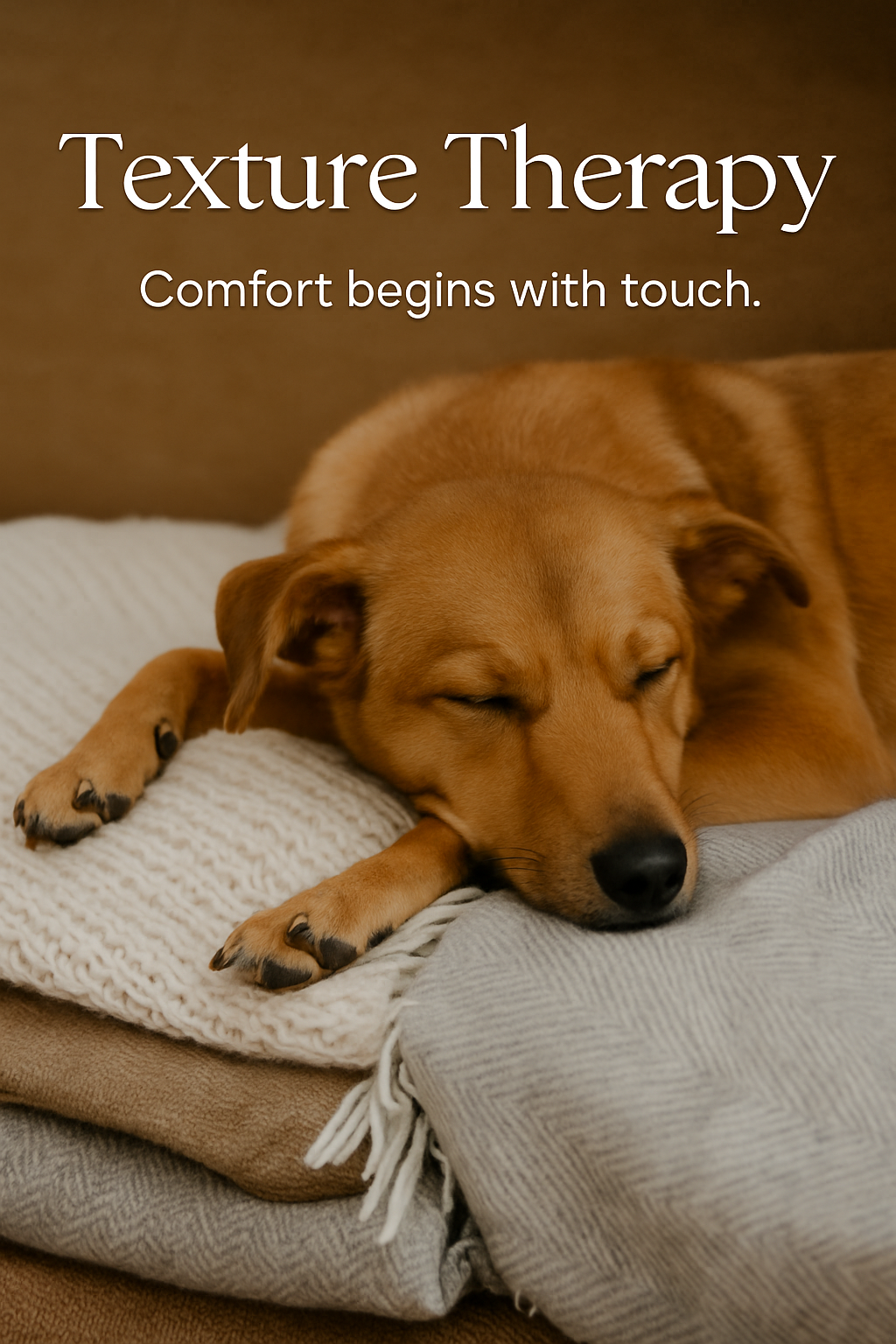
Pets interact with the world through their paws and bodies. Every surface they touch sends emotional signals — comfort, alertness, stress, or calm.
1️⃣ Soft Textures (Blankets, Beds, Plush Rugs)
Soft surfaces lower stress and encourage relaxation. Pets choose them when they seek safety, warmth, or bonding.
2️⃣ Cool Hard Textures (Tiles, Marble, Wooden Floors)
Pets move to cool floors when they feel warm, overstimulated, or anxious. Coolness helps regulate body temperature and calm the nervous system.
3️⃣ Natural Textures (Grass, Soil, Sand)
Nature textures activate sensory enrichment. They stimulate curiosity, confidence, and grounding — perfect for emotional wellness.
4️⃣ Rough or Patterned Textures (Jute Rugs, Doormats)
Some pets enjoy light roughness because it provides tactile stimulation. But overly harsh textures can cause avoidance or stress.
5️⃣ Texture Preferences = Emotional Clues
- Lying only on hard floors → overheating, anxiety, or sensory overload
- Seeking soft surfaces → comfort-seeking, emotional bonding
- Constantly wanting outdoor textures → needing stimulation or movement
How Pet Parents Can Use Texture Therapy
- Provide a mix of textures at home
- Offer soft corners for rest
- Add natural textures during walks
- Observe which surfaces your pet chooses during different moods
Textures shape your pet’s emotional balance every day. By giving them the right sensory environment, you support calmness, confidence, and happiness.