
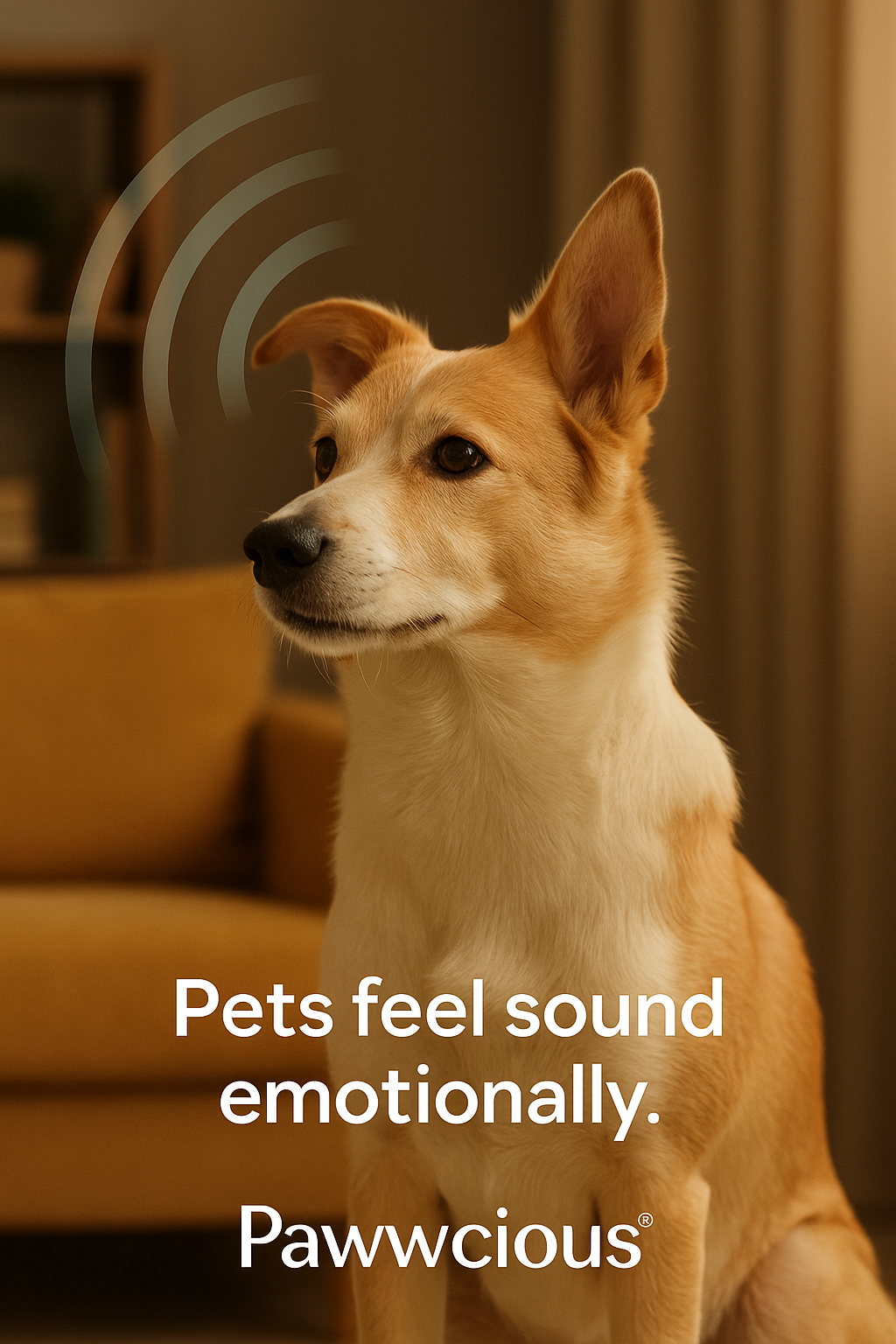
Everyday sounds — pressure cookers, doorbells, keys, footsteps, rain — create emotional responses in pets. These sound-based memories are called soundprints, and they play a major role in shaping your pet’s behavior and mood.
What Are Soundprints?
A soundprint is any repeated sound that builds an emotional association.
Examples:
- Doorbell → alertness
- Keys → parent is home
- Pressure cooker → stress
- Food bowl → excitement
- Footsteps → comfort or anxiety
Pets don’t analyze sound; they respond emotionally.
Why Pets React Strongly to Sound
Dogs and cats hear more frequencies than humans and store emotional memory linked to sound. A positive or negative experience attached to a sound shapes future reactions.
Types of Soundprints
- Safety Sounds: your voice, rain, soft music
- Alert Sounds: knocks, footsteps, horns
- Stress Sounds: fireworks, vacuum cleaner, mixer, thunder
Understanding which category a sound falls into helps you support your pet.
How to Build a Sound-Safe Home
- Introduce loud sounds gradually
- Play calming background noise
- Pair grooming with soft, consistent music to create a “calming soundprint”
- Use rugs/curtains to reduce harsh echoes
Your pet listens with emotion, not just hearing. Creating positive soundprints builds trust, confidence, and emotional wellbeing.
👉Explore more – www.pawwcious.com