Pets don’t remember through visuals like humans do.
Their memory is scent-coded.
Every scent your pet smells becomes part of a long-term archive —
a neurological filing system that maps people, places, experiences, and emotions.
Welcome to the world of olfactory memory encoding — a field rarely discussed in pet wellness.
🐽 1. The Memory Imprint: One Smell = One Chapter
When your pet meets someone new, one sniff is enough to store:
- chemical signature
- emotional association
- biological information
- comfort level
It’s like saving a contact in their internal phonebook.
💨 2. Scent Trails Become “Memory Paths”
Pets follow scent trails not just to track movement, but to reactivate memories.
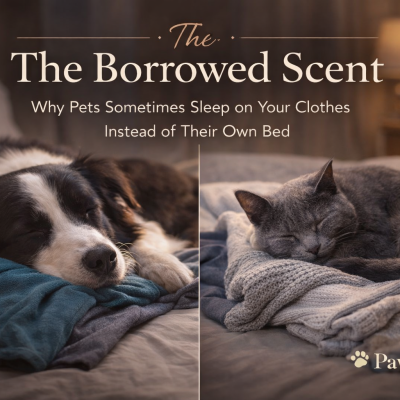
A smell left on a sofa or cushion can trigger:
- recognition
- excitement
- longing
- calmness
- alertness
Smells are emotional bookmarks.
🐕🦺 3. Emotional Events Strengthen Scent Storage
Your pet encodes scent memories stronger when:
- stressed
- excited
- deeply relaxed
- bonding
- fearful
Emotional charge = deeper memory imprint.
🌬️ 4. Layered Memory: Pets Remember People in ‘Scent Layers’
Your scent is not one smell — it’s a multi-layered profile, including:
- skin
- sweat
- hormones
- laundry
- environment
- diet
Pets store these layers separately, forming a complete memory set.
🫂 5. Why Pets Remember You Even After Long Separation
Because scent memory is stored in a deeper area of the brain (piriform cortex).
This is why your pet reacts instantly even after months or years.
Your scent is a permanent entry in their archive.
💛 Conclusion
To a pet, memory is not visual.
It’s aromatic — a living archive stored in chemical signatures.
You don’t just live in their heart.
You live in their scent library.
🌿 CTA
Support your pet’s emotional memory stability with Pawwcious® natural calming and sensory wellness routines.
👉 www.pawwcious.com