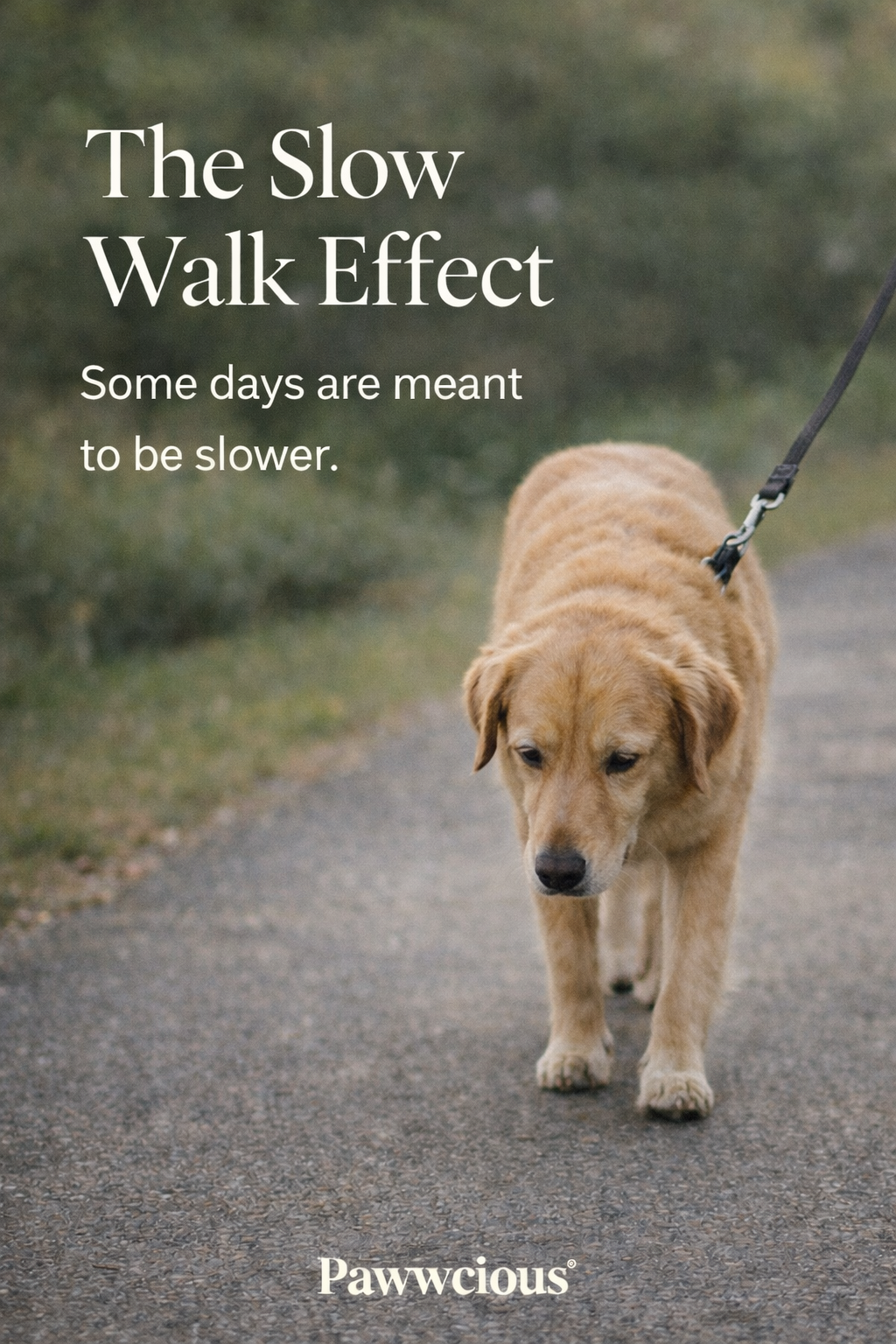
You may notice it suddenly — the leash feels lighter, the pace slower, the steps more deliberate.
This change is known as the slow walk effect, and it’s often misunderstood.
Pets don’t walk at the same speed every day because they don’t feel the same every day.
1️⃣ Emotional Load Affects Movement
Just like humans, pets carry emotional weight. On days when they feel uncertain, overstimulated, or emotionally low, their movement naturally slows.
A slow walk helps them process feelings safely.
2️⃣ Sensory Overload Outside
Busy streets, strong smells, loud sounds, or too many visual cues can overwhelm pets. Slowing down allows their nervous system to cope without panic.
This is common in urban environments.
3️⃣ Weather & Environmental Shifts
Humidity, heat, barometric pressure, and even cloudy skies affect energy levels. Pets often reduce pace to regulate body temperature and comfort.
4️⃣ Mental Fatigue, Not Physical
A pet that had high mental stimulation earlier — visitors, travel, training, or play — may walk slower later to rebalance mentally.
This is recovery, not laziness.
5️⃣ Instinctive Energy Conservation
In nature, animals don’t waste energy. Pets slow down when their body signals rest, conservation, or recalibration.
What the Slow Walk Tells You
- Smooth, relaxed steps = emotional processing
- Frequent pauses = sensory evaluation
- No resistance = healthy self-regulation
The intention matters more than speed.
How Pet Parents Should Respond
- Don’t pull or rush
- Allow sniffing and pauses
- Keep walks flexible, not goal-driven
- Observe patterns rather than one-day changes
Sometimes, the walk is about being, not moving.
Why This Behavior Matters
A slow walk is your pet saying:
“I’m listening to my body today.”
When you respect that pace, you support emotional balance, trust, and long-term wellbeing.
True wellness isn’t speed — it’s alignment.