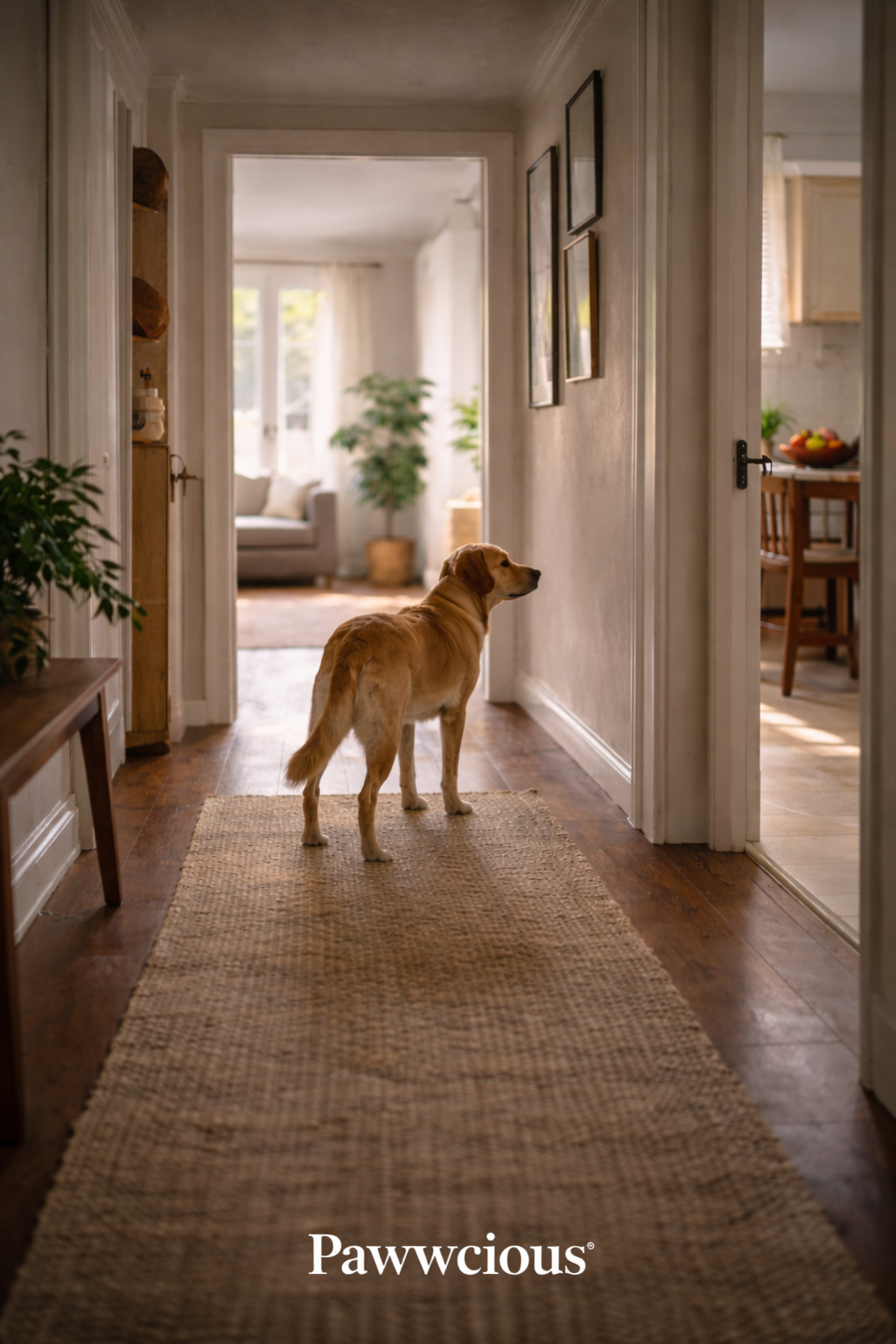
You may notice your pet standing quietly in a hallway — not entering a room, not leaving it either.
This behavior is known as the between-rooms pause, and it reveals how pets navigate emotional and sensory transitions.
1️⃣ Hallways Are Emotional Crossroads
For pets, rooms carry emotional associations — rest, play, noise, interaction.
Hallways sit between those energies.
Pausing allows pets to:
- Decide what emotional state they want next
- Avoid overstimulation
- Prepare mentally before entering
2️⃣ Sensory Mixing Happens Here
Hallways blend sounds, smells, and light from multiple spaces.
Pets pause here to sort and prioritise sensory input.
This is especially common in:
- Multi-person households
- Busy homes
- Homes with other pets
3️⃣ Choice Without Pressure
Stopping between rooms allows pets to retain autonomy.
They aren’t forced into interaction or isolation.
This pause protects emotional comfort.
4️⃣ Why Pets Don’t Always Move Forward
Not moving doesn’t mean confusion.
It means the pet is comfortable not choosing yet.
That’s emotional intelligence.
5️⃣ When the Pause Becomes Longer
Extended pauses may signal:
- Overstimulation
- Environmental stress
- Need for calm
The pause is a coping strategy — not avoidance.
🐾 What the Between-Rooms Pause Tells You
- Short pauses = healthy processing
- Repeated pauses = sensory overload
- Calm posture = emotional safety
The space matters as much as the behavior.