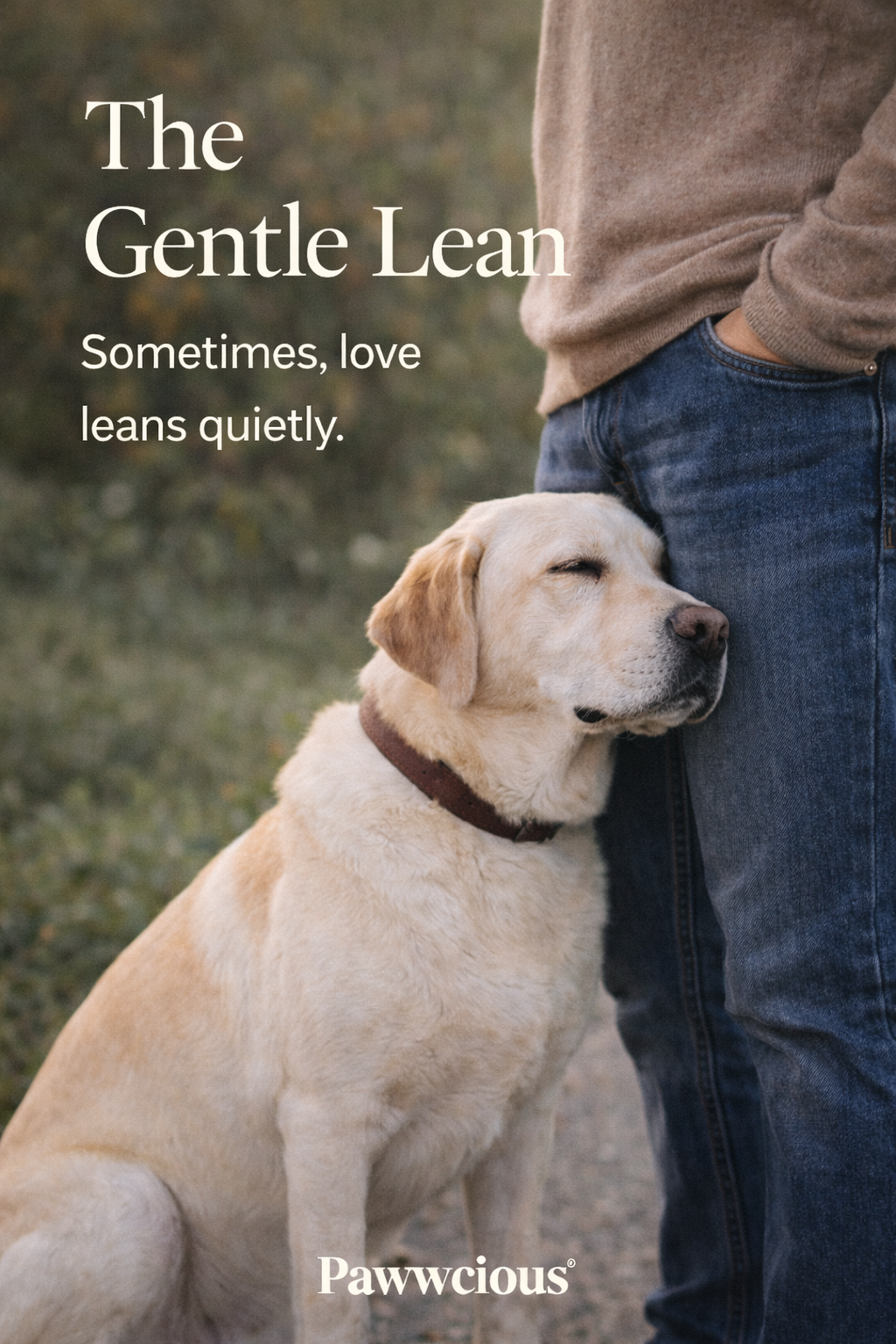
You may notice it while standing in the kitchen, sitting on the sofa, or talking on the phone — your pet slowly presses their body against your leg or side.
No demand. No excitement. Just presence.
This behavior is known as the gentle lean, and it’s one of the most meaningful bonding signals pets offer.
1️⃣ Leaning Is About Emotional Grounding
Pets lean to physically ground themselves. The gentle pressure helps them feel stable, calm, and emotionally balanced — similar to how humans find comfort in close contact.
It’s a self-soothing action, not a request.
2️⃣ Trust Without Demands
Unlike pawing or vocalising, leaning doesn’t ask for attention.
It simply says, “I feel safe here.”
Pets only lean into people they trust deeply.
3️⃣ Body Contact Reduces Anxiety
Physical closeness lowers stress hormones in pets. Leaning allows them to regulate anxiety quietly, especially in new, noisy, or emotionally charged environments.
4️⃣ Shared Energy Regulation
Pets are sensitive to human emotions. When they sense calm in you, they lean in to synchronise with that state.
It’s emotional co-regulation — instinctive and powerful.
5️⃣ Bonding Beyond Play or Touch
Not all bonding looks playful.
Some connection happens in stillness — through weight, warmth, and shared presence.
The gentle lean is one of the purest forms of silent bonding.
What the Gentle Lean Tells You
- Relaxed posture = emotional comfort
- Quiet leaning = trust and safety
- Staying leaned = grounding and reassurance
This behavior reflects emotional intelligence, not dependence.
How Pet Parents Should Respond
- Stay calm and still
- Avoid pushing them away
- Let the contact continue naturally
- Offer soft verbal reassurance if needed
You don’t need to do anything — your presence is enough.
Why the Gentle Lean Matters
That quiet pressure is your pet saying:
“This is where I feel steady.”
When you honour the gentle lean, you strengthen trust, emotional security, and the invisible bond that defines true companionship.
Sometimes, love doesn’t ask.
It simply leans in.