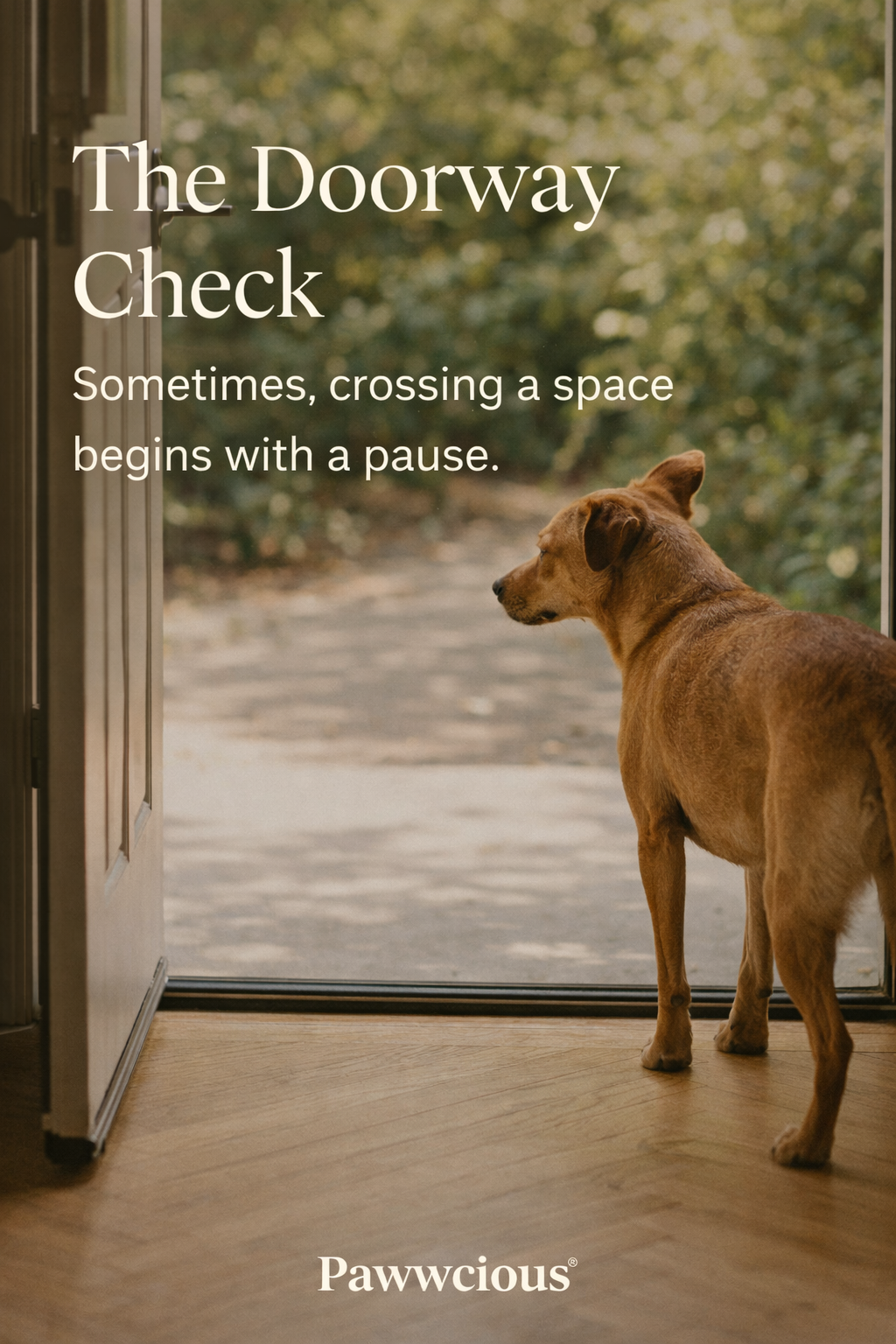
Have you ever opened a door for your pet, only to see them pause right at the threshold?
That moment — the doorway check — is a deeply instinctive and emotional behavior.
Pets don’t rush transitions. They pause to process.
1️⃣ Doorways Are Emotional Boundaries
To pets, a doorway isn’t just space — it’s a change in environment. Different smells, sounds, light, and energy exist on either side. Pausing helps them assess what lies ahead.
2️⃣ Safety Comes Before Movement
In nature, crossing thresholds without checking could be dangerous. The pause is an inherited survival instinct, not confusion or fear.
3️⃣ Permission & Trust Signals
Some pets pause to seek reassurance — a glance, a nod, or calm energy from their human. It’s their way of asking, “Is this safe?”
4️⃣ Sensory Overload Management
Outdoor spaces can be louder, brighter, and more stimulating. Pausing allows pets to prepare their nervous system before stepping forward.
5️⃣ Emotional Readiness Matters
Confident pets pause briefly and move on. Anxious or overstimulated pets pause longer. The length of the pause reflects emotional comfort, not stubbornness.
How Pet Parents Can Support the Doorway Check
- Never pull or rush your pet forward
- Allow sniffing and observation
- Use a calm voice instead of commands
- Keep door transitions predictable
- Create a stress-free home environment
Respecting the doorway check builds trust and emotional security.
Why This Pause Is Powerful
The doorway check shows that pets are mindful, not impulsive.
They read the world carefully — moment by moment.
When you honor that pause, you tell your pet:
“Your pace is safe here.”
That’s the foundation of true emotional wellbeing.