Your pet could climb onto your lap.
Could lean against you.
Could demand contact.
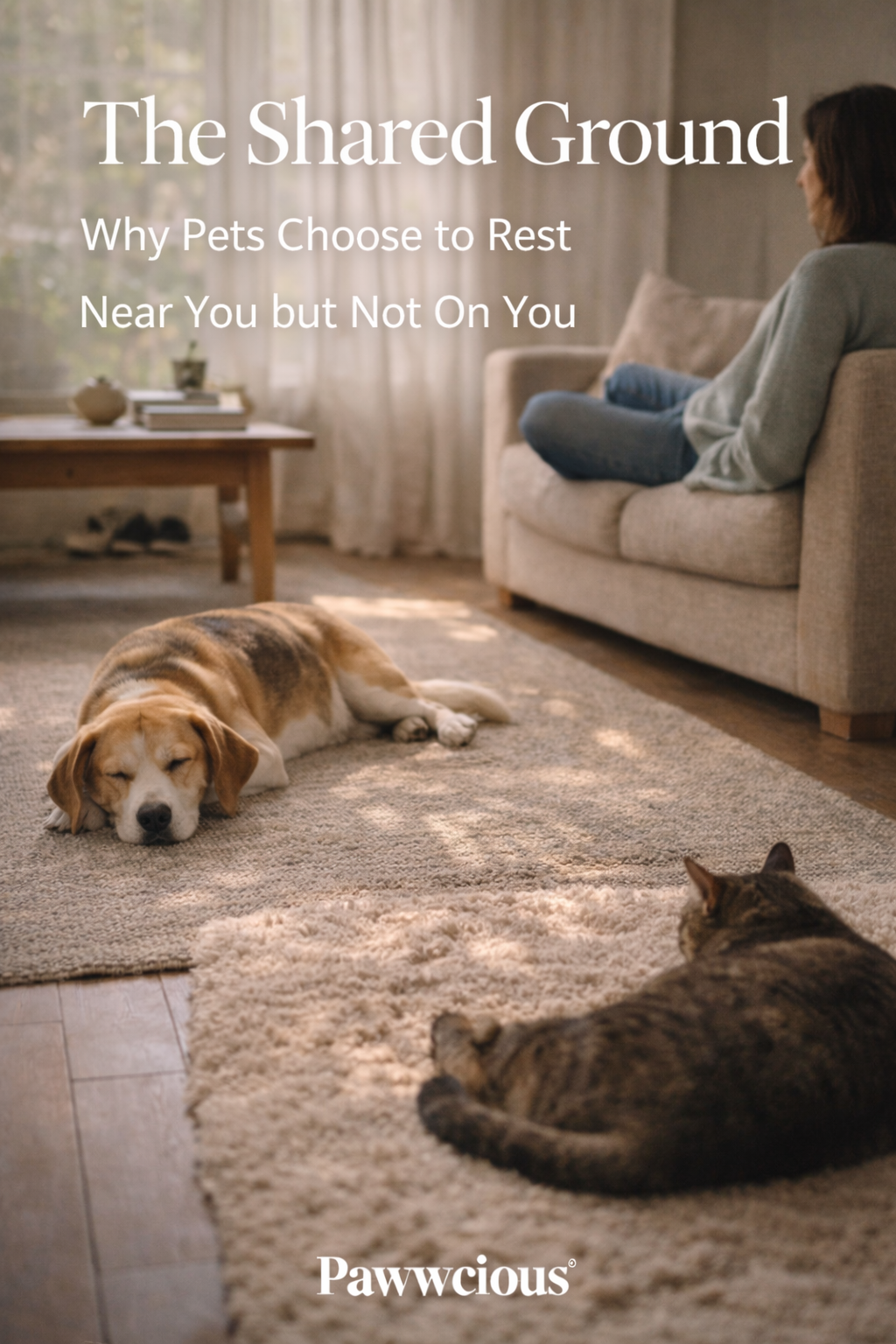
But instead, they lie nearby — on the floor, beside the sofa, at arm’s distance.
This is called the shared ground, and it’s one of the healthiest forms of emotional bonding.
1️⃣ Proximity Without Pressure
Being near you without touching allows pets to feel connected without dependency.
They can relax while still knowing you’re present.
This balance creates emotional confidence.
2️⃣ Independence Is a Sign of Trust
Pets that trust deeply don’t need constant reassurance.
Resting nearby says:
“I feel safe enough to exist on my own, near you.”
That’s not distance — that’s security.
3️⃣ Body Autonomy Matters to Pets Too
Just like humans, pets value personal space.
The shared ground allows:
- Comfort without crowding
- Awareness without stimulation
- Presence without demand
This is especially common in emotionally balanced pets.
4️⃣ Energy Regulation Happens at a Distance
Some pets rest nearby to:
- Stay calm
- Avoid overstimulation
- Match your energy without absorbing it
This is emotional co-existence, not avoidance.
5️⃣ Why This Isn’t Rejection
Many pet parents misread this behavior as aloofness.
In reality, it’s a quiet form of loyalty — choosing closeness without control.
How Pet Parents Can Respect the Shared Ground
- Don’t force physical contact
- Allow pets to choose proximity
- Acknowledge presence without interrupting
- Let stillness be connection
Bonding doesn’t always need touch.
Why the Shared Ground Matters
This behavior reflects emotional maturity.
Your pet isn’t leaving.
They’re staying — on their terms.
And that’s what secure attachment looks like.