Have you ever wondered why your pet always sleeps in that one corner, curls up near one chair, or follows the same path every day?
It’s not random — it’s geometry.
Pets instinctively choose spaces based on micro-architecture, airflow, temperature, vantage points, sound flow, and emotional patterning inside your home.
At Pawwcious®, we call this the Geometry of Comfort — the unseen design language your pet uses to choose where they feel safest, calmest, and most at peace.
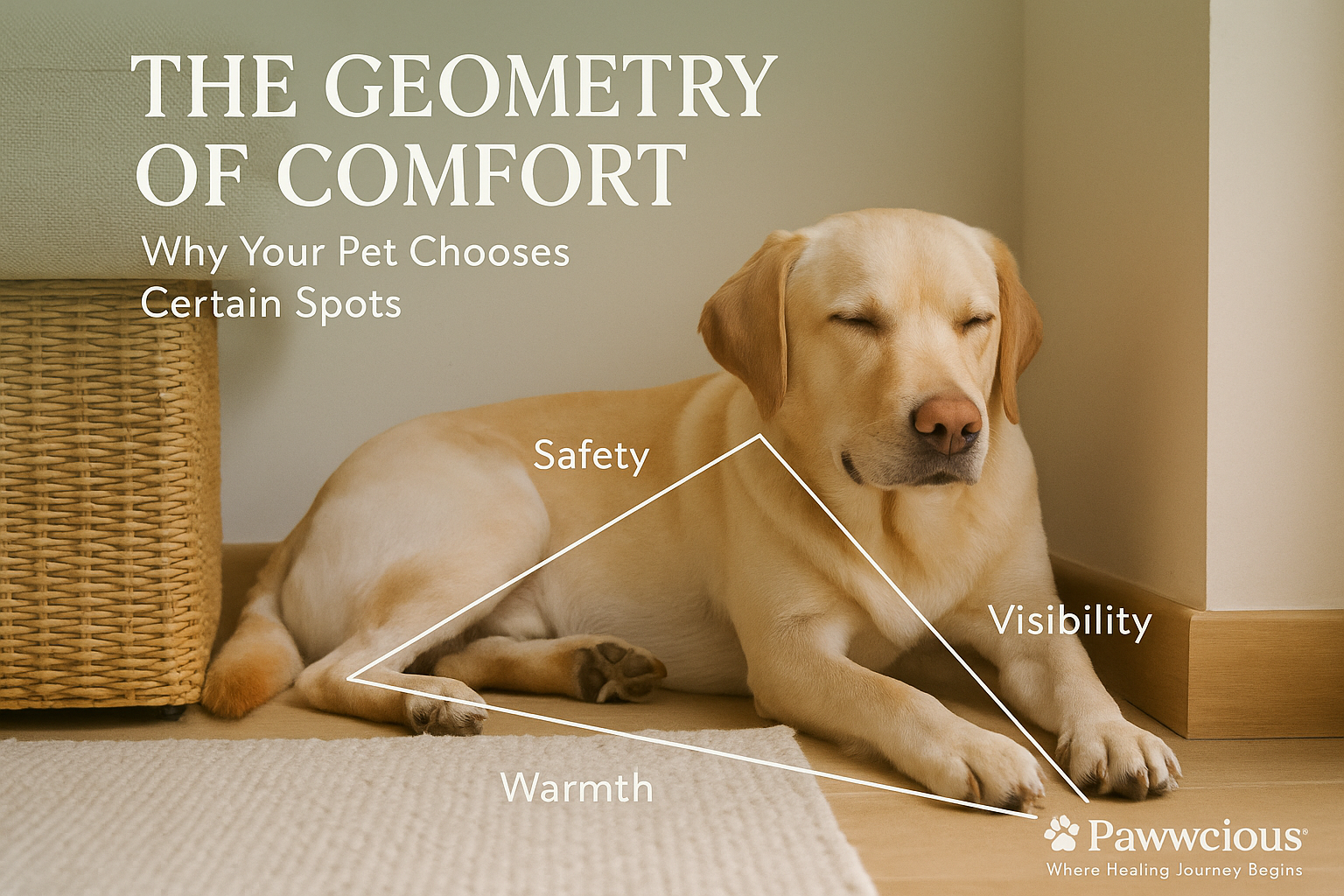
📐 1. The Comfort Triangle: Safety • Warmth • Visibility
Pets evaluate every space through three key geometric needs:
🔺 Safety point
A spot that keeps their back protected or gives them a wall to lean on.
Dogs and cats instinctively avoid being exposed from all sides.
🔺 Warmth point
Sun patches, rug textures, carpeted areas, sofa corners — all create micro-warm zones.
🔺 Visibility point
A location where they can observe movement but not be disturbed.
When these three “points” align, your pet claims that area as their comfort triangle.
🍃 2. Airflow Mapping: Why They Love Certain Corners
Pets are masters of sensing micro-air currents you don’t notice.
They avoid:
- drafty corridors
- AC blast zones
- cross-breeze intersections
They choose:
- spots with steady, gentle airflow
- warm pockets near walls
- cool floor tiles when they’re overheated
Your pet has built-in environmental intelligence — their body maps airflow like a radar.
🔊 3. Sound Geometry: The Quiet Pockets
Certain zones in your home absorb sound better — rugs, curtains, soft couches.
These spots become acoustic safe zones where your pet relaxes.
They avoid:
- door slams
- kitchen clatter
- TV echo corners
- high-traffic hallways
They choose:
- muffled corners
- low-vibration spaces
- soft sound-damping areas
Every pet has a personal sound geometry that defines where they sleep.
☀️ 4. Light Angles: Sun Patches & Shadow Zones
Your pet notices lighting more than you think.
They choose spots based on:
- morning sunlight angles
- warm afternoon rays
- cool shaded areas
- dim-lit calm corners for evening naps
This is why your pet shifts sleeping areas throughout the day — they follow the geometry of light.
🧭 5. The Observation Arc: Their Indoor “Territory Line”
Pets prefer sleeping where they can see:
- entry doors
- hallways
- you
This is called the observation arc — a natural behavior inherited from wild ancestors who rested where they could monitor surroundings without being exposed.
If your pet lies:
- diagonally facing a door
- head pointed toward movement paths
- back against a wall
…it’s intentional, not random.
🌿 6. Texture Zones: How Surfaces Shape Comfort
Your home has micro-texture zones pets actively choose between:
- cool tiles (temperature regulation)
- fuzzy rugs (comfort + scent retention)
- microfiber couches (warmth)
- wooden floors (neutral grounding)
Your pet rotates between textures to regulate:
- mood
- temperature
- sensory overload
- joint comfort
Each surface has its own comfort code.
💛 7. The Emotional Mapping Layer
Beyond geometry, your pet overlays memory and emotion onto the house.
They revisit spots where:
- they last felt safe
- they relaxed near you
- they received affection
- the energy is stable and calm
This creates personal “emotional zones” that become their favorite places
🌟 Conclusion
Your pet isn’t choosing spots randomly — they are reading your home like a map.
Light, airflow, sound, texture, and emotion all form the geometry of where they feel most grounded.
Understanding this helps you design a home where your furry one feels safer, calmer, and more connected.
Because comfort isn’t bought —
it’s created, sensed, and chosen.
And that’s where the Pawwcious® healing journey truly begins. 🌿🐾
🌿 CTA
Craft a calming home with Pawwcious® herbal & eco-friendly wellness essentials — designed to align with your pet’s natural comfort instincts.
👉 www.pawwcious.com