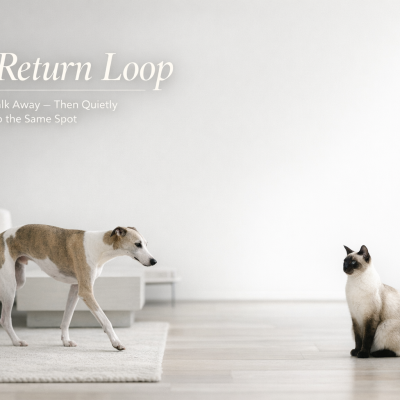

What It Means When a Pet’s Tail Stops Moving
We often associate a moving tail with emotion — wagging, swishing, flicking.
But one of the most meaningful signals pets give is when the tail stops moving altogether.
This moment is known as the sudden still tail, and it speaks volumes.
1️⃣ Stillness Is Not Absence — It’s Focus
When a tail goes still, pets are not disengaged.
They are tuning in.
Stillness allows pets to:
- Assess a situation
- Gather sensory information
- Decide their next response
It’s the pause before interpretation.
2️⃣ Emotional Neutrality Before Reaction
Pets often pause tail movement when emotions are undecided.
They are neither excited nor fearful — they are evaluating.
This happens during:
- New encounters
- Sudden changes in environment
- Unclear social cues
A still tail reflects emotional balance in transition.
3️⃣ Tail Stillness as Self-Regulation
Movement consumes energy.
Stillness conserves it.
When pets stop tail movement, they may be:
- Preventing overstimulation
- Avoiding unnecessary escalation
- Grounding themselves emotionally
This is a sign of maturity, not tension.
4️⃣ Context Matters More Than the Tail Alone
A relaxed body + still tail = awareness
A tense body + still tail = discomfort
The tail never communicates alone — it’s part of a larger emotional picture.
5️⃣ Why This Is Often Missed
Because humans look for motion to read emotion, we overlook stillness.
But for pets, stillness is often the most honest signal.
🐾 What the Sudden Still Tail Tells You
- Calm stillness = emotional assessment
- Prolonged rigidity = discomfort
- Brief pause = decision-making
Your pet isn’t frozen — they’re thinking.